

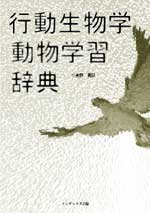
行動生物学・動物学習辞典

定価 \3400+税
ページ数 258
サイズ A5
編者 Rom Harre(ロム・ハレ)
Roger Lamb(ロジャー・ラム)
訳者 小美野 喬
付録 -
発売 インデックス出版
ISBNコード 4-901092-36-7

訳者序より

編著者がこれらの辞典を企画した目的は、特定の研究枠組みにとらわれず、心理学者がもっとも広範に研究してきた今日的事柄について総合的な大辞典以上の詳細な内容を整えて、心理学及びその近接領域の学生や実務家に提供することであった(原著の序文の一部)。

本書は、動物の学習心理学ばかりでなく、心理学の最近接領域としての行動生物学が得た重要項目を網羅しているという点で特色がある。学習心理学を学ぶ上で、発達心理学はもとより、行動生物学の知識が必要であると云われて久しいが、本書はその範囲や基準を示すものとして恰好な一書である。

本書のもう一つの特色は、各項目に関連する最適書を参考文献として豊富に提示している点にあり、このことは関連する研究を確実に展望し、新たな研究を展開する上で大いに役立つ。

英文目次(和文目次もあります)

  • A立ち読み
    • Abnormal behavior(異常行動)
    • Activity(活動)
    • Adaptation in evolutionary biology(進化生物学における適応)
    • Aggression(攻撃)
    • Agonic(反快楽性)
    • Altruism: biological(利他行動:生物学的)
    • Analogy(相似)
    • Anthropomorphism(擬人観)
    • Appeasement(なだめ)
    • Appetite(食欲)
    • Appetitive behavior(欲求行動)
    • Approach/avoidance conflict(接近/回避型・葛藤)
    • Arousal(覚醒)
    • Association(連合)
    • Attention(注意)
    • Attention structure(注意の構造)
    • Autonomic nervous system(自律神経系)
    • Avoidance(回避)
  • B
    • Behavior genetics(行動遺伝学)
    • Behaviorism(行動主義)
    • Bond(きずな)
  • C
    • Chimpanzee language(チンパンジーの言語)
    • Classical conditioning(古典的条件づけ)
    • Clock-driven behavior(時計駆動性行動)
    • Cognitive ethology(認知行動生物学)
    • Color vision(色覚)
    • Communication(コミュニケーション)
    • Concept(概念)
    • Conditioning(条件づけ )
    • Conflict(葛藤)
    • Consummatory behavior(完了行動 )
    • Conventional and epideictic behavior(儀式的・顕示的行動)
    • Cooperation(共同)
    • Coordination(協応)
    • Courtship(求愛)
    • Critical period(臨界期 )
    • Culture(文化)
    • Curiosity(新奇性)
    • Cut off(切断 )
  • D
    • Darwin, Charles(ダーウィン、チャールズ)
    • Decision making(意志決定)
    • Delayed-learning phenomenon (or delayed association)(遅延学習現象)
    • Deprivation(遮断)
    • Development(evolutionary)(進化における発達)
    • Developmental psychobiology(発達心理生物学)
    • Discrimination(弁別)
    • Displacement activity(転移行動)
    • Display(誇示行動)
    • Dominance(優位)
    • Drive(動因)
    • Drugs(薬物)
  • E
    • Emotion: ethological approaches(情動:その行動生物学的研究)
    • Emotion: satiation and starvation effects on(情動:飽和と飢餓が及ぼす効果)3
    • Epideictic behavior(顕示的行動)
    • Ethical problems of experiments with animals(動物実験の倫理的問題)
    • Ethogram(エソグラム、行動目録)
    • Ethology(行動生物学)
    • Eusocial(真社会性)
    • Evolution(進化)
    • Evolutionarily stable strategies ;ESS (進化的安定戦略)
    • Expectancy(期待)
    • Exploration(探索行動)
    • Extinction(消去)
  • F
    • Fear(恐怖)
    • Feedback(フィードバック)
    • Fitness(適応度)
    • Fixed action pattern; FAP(定型的動作パターン)
    • Food selection(食物選択)
    • Foraging(採餌行動)
    • Frustration(フラストレーション)
  • G
    • Generalization(般化)
    • Goal(目標)
    • Goal gradient(目標勾配)
    • Greeting(挨拶行動)
    • Gregariousness(群居性)
    • Group property(集団特性)
    • Group selection(集団選択)
  • H
    • Habituation(馴化)
    • Harlow, Harry F. 1905-81(ハーロゥ、ハリィ)
    • Hedonic(快楽性)
    • Hierarchy(階層性)
    • Homeostasis(ホメオスタシス)
    • Home range(行動圏)
    • Homology and analogy(相同と相似)
    • Hormones(ホルモン)
    • Hunger and thirst(飢えと渇き)
    • Huxley, Sir Julian 1887-1975(ハックスレィ、ジュリアン)
    • Hypothetical constructs and intervening variables(仮説構成体と仲介変数)
  • I
    • Imitation and observational learning(模倣学習と観察学習)
    • Imprinting(刻印づけ)
    • Inbreeding(近親交配)
    • Incentive(誘因)
    • incest (近親相姦)
    • Inhibition(抑制)
    • Innate releasing mechanism (IRM) and releaser(生得的解発機構と解発刺激)1
    • Insight(洞察)
    • Instinct(本能)
    • Intelligence(知能)
    • Intention movement(意図運動)
    • Intervening variable(仲介変数)
  • K
    • Kinesis(動性、無定位運動性)
    • Kinship(血縁)
  • L
    • Language: anthropoid ape(言語:類人猿)
    • Latent learning(潜在学習)
    • Learning(学習)
    • Learning; state-dependent(場依存学習)
    • Learning: synaptic structure and intracellular chemical theories(学習:シナプス構造と細胞間化学説)
    • Learning: theories of(学習理論)
    • Learning: Thorndike's laws(学習:ソーンダイクの法則)
    • Learning: two factor / single factor theories(学習の1元論/2元論)
    • Learning and motivation(学習と動機づけ)
    • Learning sets(学習セット、学習の構え)
    • Locomotion(移動運動)
    • Lorenz, Konrad(ロレンツ,K.)
  • M
    • Meme(ミーム)
    • Memory(記憶)
    • Meta-communication(メタ・コミュニケーション)
    • Migration(移動)
    • Mimicry(擬態)
    • Models: role in theories(モデル:理論におけるその役割)
    • Motivation(動機づけ)
  • N
    • Natural selection(自然選択)
    • Navigation(航法)
    • Neuroethology(神経行動生物学)
  • O
    • Observational larning(観察学習)
    • Observational methods(観察法)
    • Ontogeny(個体発生)
    • Operant conditioning(オペラント条件づけ)
    • Orientation(定位)
    • Orienting response(定位反応)
  • P
    • Pain(痛み)
    • Parasitism(寄生)
    • Parent-offspring conflict(親・子間コンフリクト)
    • Parental investment(PI)(親の投資)
    • Partial reinforcement effect(部分強化効果)
    • Pavlov,Ivan Petrovich(パブロフ,I.P.)
    • Perception(知覚)
    • Pheromone(フェロモン)
    • Phylogeny(系統発生)
    • Play(遊び)
    • Polygamy(複婚)
    • Preparedness(準備性)
    • Problem solving(問題解決)
  • R
    • Reafference(再感覚)
    • Recognition(認識)
    • Redirected activity(転嫁行動)
    • Reflex(反射)
    • Reinforcement(強化)
    • Relationships and social structure(関係と社会構造)
    • Relearning(再学習)
    • Releasers(解発刺激)
    • Reproductive behavior(繁殖行動)
    • Reproductive effort(繁殖努力)
    • Reproductive success(繁殖成功度)
    • Resource-holding potential(RHP)(資源の獲得保持能力)
    • Reversal learning(逆転学習)
    • Rhythms(規則性運動)
    • Ritual and ritualization(儀式的または儀式的行動)
    • RNA, DNA(RNAとDNA)
    • Role(役割り行動)
  • S
    • Search image(探索像)
    • Selfishness(利己行動)
    • Senses: chemical(化学的感覚)
    • Senses: electromagnetic(磁気感覚)
    • Senses: mechanical(機械的感覚)
    • Sensory deprivation and enrichment(感覚遮断と感覚豊富)
    • Sequential analysis(系列分析)
    • Sexual behavior(性行動)
    • Sexual differentiation and nervous system(性分化と神経系)
    • Sibling rivalry(sib-competition)(きょうだい間闘争)
    • Sign stimulus(サイン刺激)
    • Skinner, Burrhus Frederic(スキナー, B.F.)
    • Sleep(睡眠)
    • Smell(匂い)
    • Social ethology(社会行動生物学)
    • Social structure(社会構造)
    • Sociobiology(社会生物学)
    • Spacing(個体間距離)
    • Species and specification(種と種分化)
    • Spite(悪意行動)
    • Statistical methods(統計的方法)
    • Stereotype(ステレオタイプ)
    • Stress(ストレス)
    • Supernormal stimulus(超正常刺激)
    • Survival value(生存価)
    • Symbiosis(共生)
  • T
    • Taste(味)
    • Teleology(目的論)
    • Territoriality(縄張り制)
    • Thermoregulation(体温調節)
    • Thirst(渇き)
    • Thorndike, Edward Lee (ソーンダイク,E.L.)
    • Threat(威嚇)
    • Time(時間)
    • Tinbergen, Nikolas(ティンバーゲン,N.)
    • Tool using(道具の使用)
    • Transfer of learning(学習の転移)
    • Typical intensity(典型的強度)
  • U
    • Umwelt(環境)
  • V
    • Vacuum activity(真空活動)
    • Vigilance(ヴィジランス)
    • Voluntary behavior(随意行動)
    • von Frisch, Karl(フォン フリッシュ, K.)
  • W
    • Watson, John Broadus(ワトソン,J.B.)